






Legal services
Financial regulation lawyers in Prague
We help banks, fintechs, crypto firms, bond issuers, and licensed and unlicensed businesses alike to get through Czech and EU financial regulation safely and with a clear picture of what applies. Audits, compliance design and representation before the Czech National Bank (CNB) and the courts, from the first application to ongoing supervision.
4,870 reviews on Google
CZK 50 million professional liability insurance
You know the price in advance
Confidentiality under Section 21 of the Act on the Legal Profession
At least two lawyers on every case
Our financial regulation services
What do you need help with?
Choose the area you are dealing with. Each service page explains how we approach it, step by step.
01Licensing
Licence & autorizace end-to-end
Banking licences, payment institutions, investment firms (OCP), CASPs, EMIs and crowdfunding. From the business plan to a granted authorization and day-to-day supervision.Banks and credit institutionsBanking licence • CRR/CRD • LCR/NSFRPayment institutions (PSP)PI • SPI • EMI • PISP/AISP • Open bankingCapital markets and investment firmsInvestment firm • MiFID II • prospectusCrowdfundingCSP • KIIS • investor protectionBonds and securities issuesIssues • prospectus • ISIN • corporate actionsInvestment funds and trustsSICAV • Section 15 ZISIF • trust fund
02Compliance
DORA, AML & compliance
ICT resilience, AML policy, sanctions screening and governance. We design and implement a compliance programme built precisely around your business model.03Web3
MiCA, crypto and tokenization
CASP licensing, ART and EMT tokens, white papers, custody, stablecoins, NFTs and RWAs. Full legal support for web3 firms entering the EU market.Related servicesFunds, investors and corporate transactions
All commercial law servicesRegulation
The main regulatory frameworks we work with
MiCARegulation (EU) 2023/1114
DORARegulation (EU) 2022/2554
PSD2Payment services
AMLAct No. 253/2008 Coll.
CRR/CRDCapital requirements
MiFID IICapital markets
Our lawyers
Who will handle your case
Two lawyers work on every case, so you always know who you are dealing with, even when one of them is at a hearing.

Mgr. Oleksandr Spitsyn
Attorney · 6 years' experienceCzech Bar reg. no. 21443View profile
Mgr. David Imre
Trainee attorney · 4 years' experienceCzech Bar reg. no. 45923View profileReviews
What our clients say
Excellent 4.8 70 reviews on GoogleWrite a review
I highly recommend this law firm. Together we dealt with a criminal matter in which I was the injured party. Thanks to their human approach and willingness to help, I got justice and compensation for the damage caused. (translated from Czech)
They helped me with very good advice on how to run my projects. The consultation was scheduled very fast and talk was very professional.
Very efficient and professional, the problem is with the czech police but the lawyers are excellent would recommend
The firm handled my employment dispute and I was very satisfied. In the end the whole matter was settled out of court, and quickly. (translated from Czech)
Expert opinions
Where we talk about the law
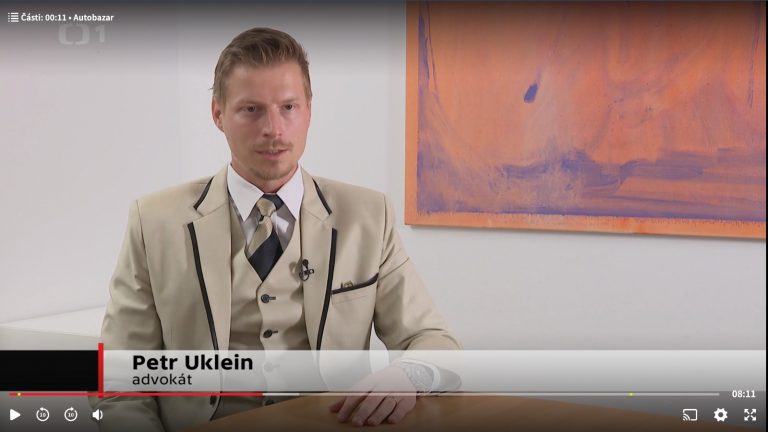
On Czech Television's consumer programme Černé ovce (Black Sheep), we answer questions that later turn into real cases.




Fees
Clear fees. No surprises.
We do most work for a fixed fee, which we confirm in writing in advance.
Initial assessmentFREEvia online chat
Hourly rateCZK 4,000+ VAT
Prices are indicative and exclude VAT. Unless expressly agreed otherwise, court, administrative and notarial fees, insurance premiums and external expert reports are not included.
Our blog
Articles on financial regulation
Finance and investment7 July 2026 · 3 min read

Finance and investment7 July 2026 · 4 min read
Finance and investment7 July 2026 · 4 min read
Frequently asked questions
What people ask before hiring a lawyer
Didn't find your answer? Message us in the chat. The initial case assessment is free.
Ask in the chatWhat is a payment institution?
A payment institution (PI) is a non-bank financial entity licensed by the Czech National Bank (CNB) to provide payment services on a professional basis under Act No. 370/2017 Coll., on Payment Services (which implements the EU's PSD2 directive).
How does a payment institution differ from a bank?
Unlike a bank, a payment institution may not take deposits from the public to pay interest on them or lend them out. It may, however, operate payment gateways, provide acquiring, maintain payment accounts and provide money remittance, payment initiation (PIS) and account information (AIS) services.
What do PIS and AIS mean?
PIS (payment initiation service) lets a client instruct a payment directly from their bank account through an open banking interface (API), without the intermediary itself holding the client's money. AIS (account information service) aggregates transaction and balance data from several banks, for example for credit scoring, accounting apps or financial management.
How much capital does a payment institution need?
The capital required depends on the scope of services: EUR 20,000 for money remittance only, EUR 50,000 for a stand-alone PIS licence and EUR 125,000 for the full range of payment services. [To be verified by an attorney: amounts under PSD2; the new PSD3 rules change them.]
When is PPSMR registration enough instead of a licence?
When the average monthly volume of payment transactions does not exceed EUR 3,000,000 (calculated over the last 12 months). There is no fixed initial capital requirement of EUR 125,000, and the CNB procedure is considerably shorter. However, services may be provided only in the Czech Republic, with no passporting across the EU.
Does DORA apply to payment institutions?
Yes. Financial institutions must have a robust IT risk management framework, a register of third-party providers (cloud and software suppliers), resilience testing including penetration tests, and an ICT incident reporting process.
Is the initial case assessment free?
Yes. Describe your situation in the online chat or the form and we will tell you, free of charge, how we see the matter, how quickly you need to act and what a solution would cost. Only then do you decide whether to instruct us.
Is the information I share with you protected?
Yes. An attorney is bound by law to keep confidential everything they learn from you in connection with your matter (Section 21 of the Act on the Legal Profession). Only you can release them from that duty.
How quickly will you get back to me?
We reply to messages within 24 hours on working days.
Get in touch
What happens next
- 1We assign your matter to a specialistBased on the area you choose in your enquiry.
- 2We get back to you within 24 hoursOn working days, by phone or email.
- 3You receive a plan and a priceIn writing, before any work begins.